
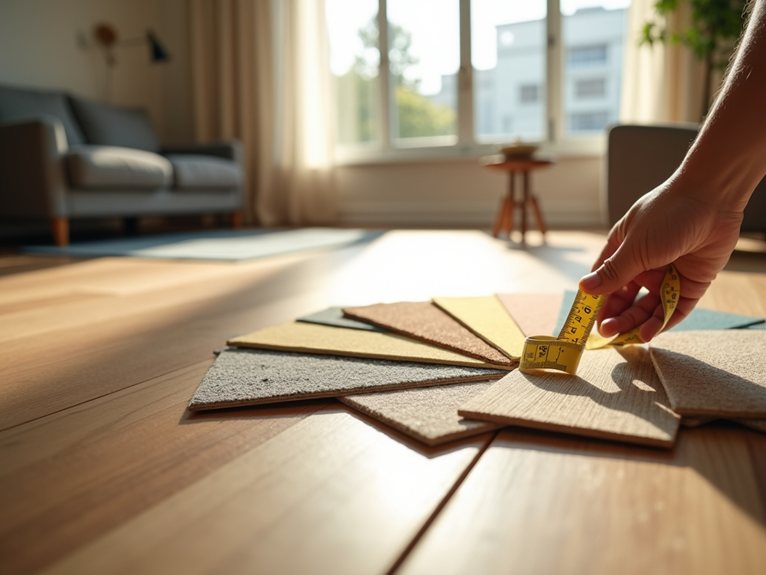
The Ultimate Guide to Residential Flooring for First-Time Homeowners
When choosing residential flooring, you’ll need to take into account each room’s specific requirements and your budget. Popular options include hardwood ($2-15/sq ft) for living areas, waterproof vinyl plank ($10-20 year lifespan) for kitchens, and porcelain tile (50+ year lifespan) for bathrooms. Factor in installation costs ($3-8/sq ft), maintenance needs, and durability ratings to make informed decisions. A thorough understanding of materials, costs, and room-specific recommendations will help you maximize your flooring investment.
Key Takeaways
- Choose flooring based on room function: water-resistant materials for bathrooms/kitchens, hardwood for living spaces, and carpet for bedrooms.
- Budget $2-15 per square foot for materials, plus installation costs of $3-8 per square foot and a 10-15% contingency.
- Consider material lifespans: hardwood lasts 50-100 years, porcelain tile 50+ years, vinyl plank 10-20 years, and carpet 5-15 years.
- Factor maintenance requirements: hardwood needs quarterly refinishing, carpet requires bi-annual professional cleaning, and tile needs annual grout sealing.
- Professional installation typically takes 2-4 days, while DIY projects require 4-7 days, depending on complexity and experience.
Understanding Different Flooring Materials and Their Benefits
When selecting flooring for your new home, you’ll need to weigh several key materials against your lifestyle, budget, and maintenance preferences. Hardwood offers timeless visual aesthetics and excellent durability but requires regular maintenance to prevent scratches. Luxury vinyl provides waterproof protection and scratch resistance while mimicking natural materials at a lower cost. Ceramic tile delivers superior moisture resistance and easy cleaning, making it ideal for bathrooms and kitchens.
Consider potential health impacts when choosing materials. Low-VOC options like cork and bamboo minimize indoor air pollution, while hypoallergenic materials such as porcelain tile reduce allergen buildup. Your climate also affects material performance – natural stone stays cool in warm regions, while engineered hardwood better handles humidity fluctuations. Each option presents distinct advantages for specific rooms and living conditions.
Cost Analysis: What to Budget for Your New Floors
Beyond material selection, understanding flooring costs helps you plan a realistic budget for your home renovation. You’ll need to account for materials ($2-15 per square foot), underlayment ($0.50-1.50 per square foot), and professional installation ($3-8 per square foot). Don’t forget supplementary expenses like permit fees, which vary by municipality but typically range from $200-500.
Factor in removal of existing flooring ($1-3 per square foot) and subfloor repairs if needed ($2-4 per square foot). Various financing options are available, including home improvement loans, credit lines, or manufacturer financing. Set aside 10-15% of your total budget for unexpected issues like water damage or structural repairs uncovered during installation. Remember to request detailed quotes from multiple contractors, ensuring they include waste removal and warranty coverage in their estimates.
Durability and Lifespan: Making the Right Investment
Your flooring’s lifespan depends heavily on both your choice of materials and your commitment to proper maintenance, with hardwood lasting 25+ years and laminate averaging 15-25 years when properly cared for. You’ll need to take into account foot traffic patterns throughout your home, as high-traffic areas like entryways and hallways require more durable materials than lesser-used spaces like guest bedrooms. Understanding the relationship between durability, maintenance requirements, and expected wear will help you select flooring that delivers the best long-term value for your investment.
Maintenance Impact on Longevity
Proper maintenance of residential flooring can dramatically extend its lifespan and preserve its aesthetic appeal, making it a critical factor in protecting your investment. To guarantee warranty preservation, you’ll need to follow manufacturer-specified cleaning protocols and maintenance schedules. This includes using approved cleaning agents and avoiding harsh chemicals that could damage protective coatings.
Tool selection plays a pivotal role in maintenance effectiveness. You’ll want to use manufacturer-recommended equipment like microfiber mops for hardwood, specific vacuum attachments for carpet, and non-abrasive scrubbers for tile. It’s important to avoid steam cleaners on laminate flooring and wire brushes on natural stone. By implementing these maintenance practices consistently, you’ll prevent premature wear, maintain slip resistance, and potentially double your flooring’s functional lifespan.
Popular Materials’ Expected Lifespans
The expected lifespan of residential flooring materials varies substantially, influencing both initial investment decisions and long-term value. A lifecycle assessment of common materials reveals that solid hardwood floors can last 50-100 years with proper maintenance, while engineered hardwood typically spans 20-30 years. You’ll find that porcelain tile offers 50+ years of service, and natural stone can exceed 100 years.
Laminate flooring’s warranty variance ranges from 10-25 years, reflecting its mid-range durability. Vinyl plank typically lasts 10-20 years, though premium brands may extend to 25 years. Carpet generally requires replacement every 5-15 years, depending on fiber quality and traffic patterns. When selecting your flooring, consider these lifespan projections alongside your long-term occupancy plans to make a cost-effective choice.
Traffic Patterns and Wear
When evaluating flooring options for different areas of your home, understanding traffic patterns becomes essential for maximizing durability and investment value. You’ll need to identify high-traffic zones like entryways, hallways, and kitchen pathways where wear occurs most frequently. Strategic furniture placement can help redirect foot traffic and protect vulnerable areas.
Consider how your family moves through spaces daily. Install more durable materials in high-traffic areas and use visual zoning techniques to naturally guide movement patterns. You’ll extend your flooring’s lifespan by incorporating wear-resistant thresholds between spaces and planning for furniture placement that promotes ideal traffic flow.
Installation Methods and Timeline Expectations
Installing new flooring requires careful consideration of both method selection and project timing to guarantee ideal results. You’ll need to understand permit processes and work sequencing before starting any installation. Professional installers typically complete most residential projects within 2-4 days, while DIY installations may take 4-7 days, depending on complexity and experience level.
Professional flooring installation requires strategic planning and proper permits, with projects taking 2-4 days for experts or up to a week for DIYers.
- Floating installations offer quick completion, requiring minimal subfloor preparation and no adhesives
- Nail-down methods demand precise spacing and careful attention to manufacturer specifications
- Glue-down applications need specific temperature and humidity conditions, plusan extended drying time
Consider your lifestyle needs when scheduling installation. Most contractors work room by room, allowing you to maintain access to essential areas. Always verify local building codes and obtain necessary permits before beginning your flooring project.
Maintenance Requirements for Various Flooring Types
Proper maintenance of your residential flooring substantially impacts its longevity and appearance. Each flooring type requires specific care protocols: hardwood needs quarterly refinishing and prompt spill cleanup to prevent warping, while vinyl demands weekly damp mopping and pH-neutral cleaners. For carpet, you’ll need bi-annual professional cleaning and immediate stain removal using manufacturer-approved products.
Seasonal care varies by material – protect hardwood from winter humidity fluctuations using humidifiers, and shield stone flooring from summer’s intense UV exposure. Laminate requires minimal maintenance but doesn’t tolerate standing water. For ceramic tile, clean grout lines monthly and reseal annually. Always use material-specific cleaning solutions and follow manufacturer guidelines to maintain warranty coverage and guarantee your flooring’s peak performance.
Room-by-Room Flooring Recommendations
Different rooms in your home demand specific flooring solutions based on their unique functions and environmental conditions. When selecting flooring, consider how each space’s lighting effects and spatial flow impact your daily activities. For kitchens and bathrooms, opt for water-resistant materials like porcelain tile or luxury vinyl. Living areas benefit from hardwood or engineered wood, which creates warmth and seamless spatial flow between connected rooms.
- Primary bedrooms shine with plush carpeting or engineered hardwood, providing comfort underfoot while absorbing sound
- Home offices work well with durable laminate or cork flooring, offering resilience against chair wheels and foot traffic
- Basements require moisture-resistant options like vinyl plank or sealed concrete to prevent water damage and mold growth
Frequently Asked Questions
Can Pets Damage Radiant Floor Heating Systems Installed Under Flooring?
Your pets’ urine damage won’t affect properly sealed radiant heating systems, but their claw punctures could potentially damage the tubing if you’ve installed thin or inadequate protective flooring layers above it.
What Flooring Options Are Best for Homes in Flood-Prone Areas?
You’ll want waterproof vinyl or porcelain tile, both durable and moisture-resistant. They’re easy to clean, won’t warp, and prevent mold growth after flooding. Choose raised installation for extra protection.
How Long Should New Flooring Acclimate Before Installation Begins?
You’ll need 48-72 hours for proper acclimation duration before installing your flooring. Conduct moisture testing daily and maintain consistent room temperature until installation to prevent warping and expansion issues.
Does Changing Flooring Types Affect a Home’s Resale Value Significantly?
Like a stock market swing, flooring choices can substantially impact your home’s value. Today’s buyer preferences favor hardwood and luxury vinyl, with market trends showing up to 5% increased resale value for premium flooring.
Can Existing Baseboards Be Reused When Installing New Flooring?
You can reuse baseboards if they’re in good condition, but you’ll need to account for height adjustment with the new flooring and guarantee style matching. Remove them carefully to prevent damage.
Conclusion
Picking practical and promising flooring for your property doesn’t need to be perplexing. You’ll find that focusing on your family’s functionality needs, financial limits, and future resale value will guide your decisions effectively. Whether you’ve chosen classic hardwood, contemporary luxury vinyl, or cozy carpet, you’re now equipped to make smart selections that’ll serve your space for years to come. Take these tools and revitalize your home with confidence.


