
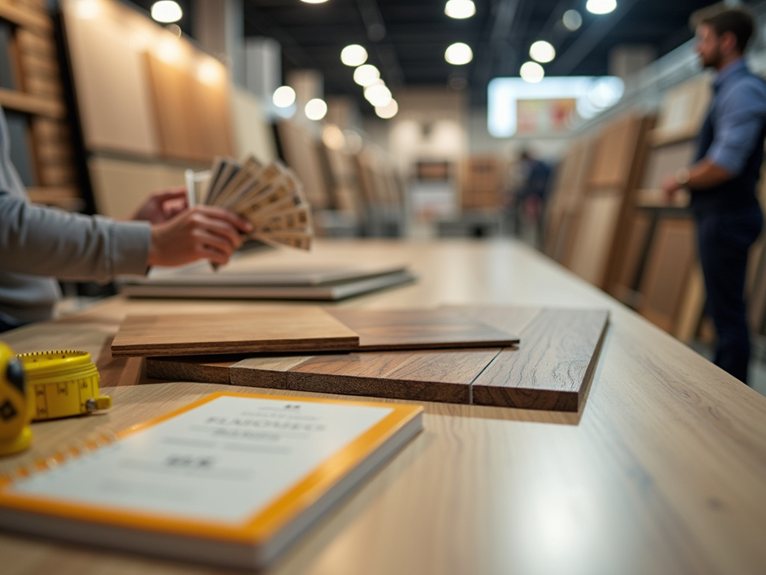
How to Choose the Right Floor Covering Store Without Wasting Money
To choose a reliable floor covering store, you’ll need to research store reputations through online reviews and local recommendations. Compare product selections, quality standards, and certifications while verifying installation credentials and warranties. Don’t forget to get detailed pricing breakdowns that include hidden costs like delivery and removal fees. Look for stores with 5+ years of experience and strong after-sales support. The key details below will help guide your selection process.
Key Takeaways
- Research store reputations through Better Business Bureau ratings, online reviews, and local word-of-mouth recommendations to ensure reliability.
- Verify licenses, certifications, and insurance coverage before committing to any flooring retailer or installer.
- Compare pricing transparently, including installation fees, materials, and hidden costs from multiple stores to avoid unexpected expenses.
- Check product quality standards and warranties, requesting samples and documentation of third-party testing certifications.
- Review customer support policies and claims processes to ensure the store provides reliable after-sales service and problem resolution.
Research and Compare Store Reputations
Why trust your flooring investment to just any retailer? Begin your search by thoroughly investigating potential floor covering stores’ reputations. Check online review platforms, focusing on detailed customer feedback about product quality, installation services, and post-purchase support.
Look for stores that have earned industry awards or received positive press coverage in local business publications. These accolades often indicate a commitment to excellence and customer satisfaction. You’ll want to verify each store’s Better Business Bureau rating and examine how they’ve handled any past complaints.
Don’t overlook the power of word-of-mouth recommendations from neighbors, friends, and local contractors. Ask about their experiences with specific stores, particularly regarding product durability, pricing transparency, and warranty fulfillment. Create a shortlist of stores that consistently demonstrate reliability and professionalism through their reputation.
Evaluate Product Selection and Quality Standards
You’ll want to visit stores that offer an extensive range of flooring materials, from hardwood and luxury vinyl to tile and carpet, ensuring you have plenty of options to match your specific needs. Look for retailers who maintain high quality standards through independent testing certifications like FloorScore® for indoor air quality and Flooring Industry Environmental Standards for sustainability. Compare the durability ratings, warranties, and price points across different product lines to determine which store offers the best value for your investment.
Compare Material Options Available
When exploring floor covering options, it’s important to evaluate both the variety and quality of materials available at different stores. You’ll want to compare hardwood, laminate, vinyl, tile, and carpet selections while considering each material’s surface texture and maintenance needs.
Look for stores that offer extensive samples of each flooring type, allowing you to examine durability firsthand. Pay attention to whether the store carries both basic and premium lines within each category. This range helps you make informed decisions based on your budget and lifestyle requirements.
Don’t forget to assess specialty materials like waterproof vinyl planks or stain-resistant carpeting if you need specific performance features. A store with diverse material options demonstrates their commitment to meeting various customer needs while providing solutions for different living spaces.
Quality Testing and Certifications
Professional flooring retailers should display recognized industry certifications and quality testing documentation for their products. When evaluating quality standards, you’ll want to verify that products have been tested by independent third-party Labs using established Testing Methodologies.
- Look for ASTM International certification, which tests slip resistance, durability, and fire safety
- Check for FloorScore certification for indoor air quality standards
- Verify Carpet and Rug Institute (CRI) Green Label Plus certification for carpet products
- Confirm products meet CARB Phase 2 compliance for formaldehyde emissions
- Request documentation of wear-layer testing results and performance ratings
These certifications guarantee your flooring meets safety and performance standards. Don’t hesitate to ask retailers about specific test results or additional documentation that validates their products’ quality claims.
Price-to-Performance Ratio Analysis
Although price often drives purchasing decisions, understanding the relationship between cost and performance is essential when selecting floor coverings. You’ll want to analyze each product’s durability, maintenance requirements, and expected lifespan against its purchase price to determine true long-term value.
Start with use case profiling by evaluating your specific needs – foot traffic levels, moisture exposure, and maintenance capabilities. Then apply value indexing by comparing similar products across different price points, focusing on warranties, wear ratings, and material quality. Look for flooring that offers the best balance of features for your budget.
Consider maintenance costs, installation requirements, and replacement intervals in your calculations. A higher upfront investment in quality flooring often translates to lower total ownership costs over time, especially in high-traffic areas.
Understanding Pricing and Hidden Costs
How much you’ll actually pay for flooring often extends far beyond the advertised price per square foot. To protect yourself from unexpected costs, you need to understand markup transparency and freight surcharges that can substantially impact your final bill.
Ask your flooring retailer to provide a detailed breakdown of these potential expenses:
- Installation fees, including subfloor preparation and old flooring removal
- Additional materials like underlayment, threshold strips, and baseboards
- Freight surcharges and delivery costs to your location
- Waste factor charges (typically 10-15% extra material)
- Post-installation services, such as cleanup and haul-away fees
Don’t hesitate to request written documentation of all charges before committing to a purchase. This transparency will help you make an informed decision and avoid costly surprises during your flooring project.
Assess Installation Services and Warranties
When selecting a flooring retailer, you’ll need to carefully evaluate both their installation services and warranty coverage, as these factors can substantially impact your long-term satisfaction. Ask about their installer training programs and certification requirements to make certain you’re getting qualified professionals. Verify that they provide thorough site protection measures to safeguard your home during installation.
Request detailed warranty documentation that clearly outlines coverage terms, duration, and claim procedures. Make sure you understand which issues are covered under manufacturer warranties versus installation guarantees. Look for retailers who offer written assurances on their workmanship and maintain liability insurance. Don’t hesitate to ask about their post-installation support and how they handle potential problems that might arise after completion.
Check Store Credentials and Experience
You’ll want to confirm that any floor covering store you’re considering has a valid business license in your state and city. A store’s longevity in the flooring industry often indicates reliability and proficiency, so ask how long they’ve been serving your local area. Check if they’re members of professional organizations like the World Floor Covering Association or the National Wood Flooring Association, as these credentials demonstrate their commitment to industry standards.
Verify Business License Status
Before trusting a floor covering store with your investment, make sure to verify its business credentials and licensing status. You’ll want to protect yourself by conducting a thorough license lookup and expiry check through your state’s licensing board or consumer protection agency.
- Contact your local business licensing department to confirm the store’s operating permit is current
- Check with the state contractor’s board to verify specialized flooring installation certifications
- Review the Better Business Bureau for the store’s registration status and standing
- Verify liability insurance coverage and bonding through official documentation
- Search state and local databases for any outstanding violations or compliance issues
Remember that legitimate businesses will readily provide their license numbers and documentation when asked. Don’t hesitate to walk away if a store can’t verify its credentials.
Length of Industry Operation
Beyond licensing requirements, a store’s track record in the flooring industry speaks volumes about its reliability and know-how. You’ll want to investigate how long they’ve been serving your local community and examine their founding milestones. Look for stores that have operated for at least 5-10 years, as they’ve likely developed stable supplier relationships and refined their installation practices.
Research the company’s historical growth, including any expansions or additional locations they’ve opened. These indicators often reflect successful business practices and customer satisfaction. You can verify their operational history through your local Chamber of Commerce, industry associations, and online business databases. Don’t hesitate to ask the store’s management about their company timeline and industry experience – established businesses are usually proud to share their background.
Verify Customer Support and After-Sale Policies
Understanding a store’s customer support and after-sales policies can make the difference between a smooth flooring purchase and potential headaches down the road. When evaluating support channels and escalation procedures, you’ll want to verify specific protection measures before making your purchase.
- Request a written copy of the store’s warranty and installation guarantees
- Confirm available support channels, including phone, email, and in-person assistance
- Review their claims process and typical response timeframes
- Check their policy on product defects and installation errors
- Verify their escalation procedures for resolving disputes
Don’t hesitate to ask detailed questions about these policies during your initial store visit. You’ll want to confirm they provide clear, documented solutions for any potential issues that might arise after your flooring installation.
Frequently Asked Questions
How Long Should I Wait Before Walking on Newly Installed Floors?
You’ll need to wait 24-48 hours for adhesives to cure and finish drying completely. Light foot traffic’s okay after 24 hours, but wait 72 hours before moving furniture back in.
Can I Buy Remnants or Leftover Materials at Discounted Prices?
You’ll find discounted remnants at most flooring stores, but check material grading and return policies first. Quality remnants can save you money while still providing durable, safe flooring for smaller spaces.
What’s the Best Season to Purchase and Install New Flooring?
Late fall and winter’s low humidity effects make installation ideal. You’ll catch offseason discounts as flooring stores are less busy, and your materials won’t expand or contract during installation.
Should I Remove My Old Flooring Myself to Save Money?
Don’t remove flooring yourself unless you’re experienced. You’ll need proper safety equipment and must factor in disposal costs. Professional removal guarantees safe handling of potentially hazardous materials like asbestos.
Do I Need to Move Furniture Before the Store’s Installation Team Arrives?
While you might love playing furniture Tetris, yes, you’ll need to clear the space. Remove fragile items and secure access pathways for installers to work safely and efficiently with your flooring.
Conclusion
Did you know that homeowners who thoroughly research flooring stores save an average of 27% on their final purchase? By following these guidelines for selecting the right floor covering retailer, you’ll avoid costly mistakes and make sure you’re working with a reputable business. Remember to verify credentials, compare prices, understand warranties, and evaluate installation services. Your informed choice will protect your investment and deliver lasting satisfaction.


