
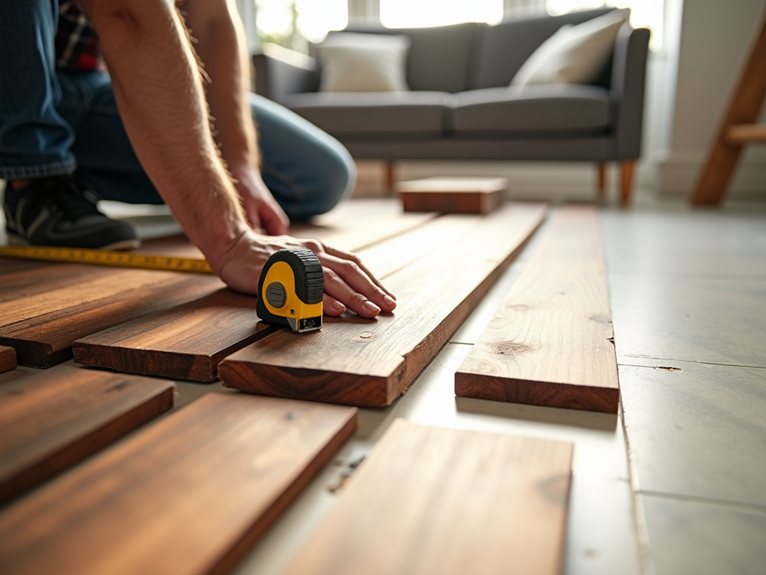
10 Expert Flooring Contractor Tips That Instantly Increase Home Value
You’ll increase your home’s value by focusing on smart flooring choices in key areas. Install hardwood or luxury vinyl in high-traffic zones, use consistent flooring throughout main living spaces, and upgrade entryways with premium materials like natural stone. Add heated bathroom floors, incorporate moisture protection systems, and invest in professional installation for maximum ROI. These contractor-backed strategies deliver up to 80% return on project costs – and that’s just the beginning of what strategic flooring can do.
Key Takeaways
- Install hardwood flooring in high-traffic areas using durable species like oak or maple to maximize long-term value and appeal.
- Choose luxury vinyl flooring with a minimum 20-mil wear layer for optimal return on investment and durability in moisture-prone spaces.
- Eliminate threshold strips between rooms and maintain continuous flooring patterns to create visual flow and a perceived larger space.
- Add heated floors in bathrooms, which can command a 3-7% resale premium and reduce long-term heating costs.
- Install smart moisture protection systems with leak detection to prevent water damage and demonstrate proactive home maintenance.
Choose Hardwood in High-Traffic Areas
When selecting flooring for heavily used spaces like entryways and living rooms, hardwood stands out as the most durable and practical choice. You’ll find that quality hardwood floors can withstand decades of foot traffic while maintaining their aesthetic appeal. To guarantee maximum longevity, opt for harder species like oak, maple, or hickory.
Consider sustainable sourcing when choosing your hardwood to minimize environmental impact and promote responsible forestry practices. You’ll also benefit from hardwood’s superior acoustic performance, as it helps reduce echo and sound transmission between floors. For high-traffic areas, select boards with a higher Janka hardness rating and apply a commercial-grade finish to protect against scratches and dents. Installing hardwood perpendicular to joists will provide additional structural stability and prevent premature wear in your most frequented spaces.
Invest in Professional Installation
Although DIY projects can save money upfront, professional flooring installation guarantees ideal results and long-term value. When you hire certified contractors, you’ll protect your investment through licensed warranties and expert craftsmanship.
Start your contractor vetting process by checking credentials, insurance coverage, and past project portfolios. Request detailed quotes that outline material costs, labor fees, and timeline expectations. You’ll want to confirm your installer offers extensive warranties that cover both materials and workmanship. Professional installation also helps maintain manufacturer warranties, which often become void with DIY installation attempts.
Select Consistent Flooring Throughout Main Living Spaces
When you’re planning your home’s flooring, choosing the same material throughout your main living spaces will create a seamless flow between rooms and make your home feel larger. You’ll maximize the visual impact of your square footage by eliminating threshold strips and harsh breaks between different flooring types. This unified approach to flooring design delivers a cohesive, sophisticated look that can convert disconnected spaces into an integrated living environment.
Seamless Flow Between Rooms
Creating a seamless flow between rooms starts with selecting consistent flooring materials throughout your main living spaces. When moving between areas, make sure threshold strips are properly secured and leveled to eliminate tripping hazards. Consider lighting gradation between rooms to maintain visual continuity and highlight your flooring’s natural features. Pay attention to furniture choreography – arrange pieces to create clear pathways that complement your flooring’s direction and pattern.
For doorways and open-concept areas, align flooring patterns to minimize visible seams. If you’re using different materials, choose complementary colors and textures that blend naturally. Install connector strips that match your flooring’s finish and maintain proper height alignment. This attention to detail will create an uninterrupted visual flow while guaranteeing safe passage between spaces.
Enhanced Visual Square Footage
By selecting consistent flooring throughout your main living spaces, you’ll instantly expand the perceived size of your home. This design approach eliminates visual barriers that typically break up your space when using different flooring materials between rooms.
Consider installing large planks in a diagonal layout to maximize this effect. Diagonal installations create longer sight lines that draw the eye across the space, making rooms appear wider and longer. When you combine this technique with consistent flooring materials, you’ll achieve an uninterrupted flow that visually expands your square footage.
For ideal results, maintain this continuous flooring pattern through your main living areas, including your entryway, kitchen, dining room, and living room. This strategy works particularly well with hardwood, luxury vinyl planks, or laminate flooring options that offer extended plank sizes.
Unified Design Creates Impact
A unified flooring design throughout your main living spaces delivers a powerful visual statement while establishing a cohesive home aesthetic. Selecting consistent flooring materials across connected areas creates an uninterrupted flow that maximizes your home’s perceived value and functionality. Your choice should complement your existing color palette and fixture coordination while meeting practical needs.
- Creates a seamless flow between living spaces, reducing visual barriers
- Simplifies maintenance with standardized cleaning procedures across rooms
- Provides better resale potential by appealing to buyers’ preference for continuity
- Allows furniture and décor to move freely between spaces without clashing
- Strengthens structural integrity by eliminating transition strips and reducing wear points
When selecting unified flooring, consider high-traffic durability and safety features like slip resistance to protect your family while maintaining aesthetic appeal.
Upgrade Your Entryway With Premium Materials
Want to make an unforgettable first impression? Your entryway’s flooring sets the tone for your entire home. Invest in premium materials like natural stone, porcelain, or hardwood to create a sophisticated foundation that withstands heavy foot traffic.
Install statement lighting above your entryway flooring to highlight premium materials and guarantee safe movement. Consider recessed fixtures or a graceful pendant to illuminate the space effectively. Add decorative thresholds between your entryway and adjacent rooms to create smooth passages while protecting floor edges from wear.
Choose slip-resistant materials with proper texture and grip for wet conditions. Opt for moisture-resistant options like sealed granite or high-grade porcelain that won’t warp or deteriorate. When selecting premium materials, focus on durability ratings and maintenance requirements to guarantee long-term value and safety.
Install Heated Floors in Bathrooms
While heated bathroom floors can add $1,000-2,000 to your installation costs, you’ll benefit from increased home value and reduced heating bills over time. You’ll need to plan the heating system layout carefully, ensuring proper spacing between heating elements and selecting an appropriate thermostat control system. For best results, combine your heated floor installation with proper insulation underneath and choose compatible flooring materials like ceramic tile or natural stone that conduct heat effectively.
Costs Vs Long-Term Benefits
Despite their higher upfront installation costs of $1,200-2,500 per bathroom, heated floors can deliver significant long-term value through reduced energy bills, increased home resale value, and enhanced comfort.
The payback timeline typically ranges from 5-8 years, with homes featuring heated floors commanding a 3-7% resale premium. You’ll benefit from:
- Lower heating costs as radiant heat rises evenly through the room
- Reduced risk of mold and mildew growth due to faster floor drying
- Enhanced safety by eliminating cold spots that can cause slipping
- Improved air quality with less dust circulation compared to forced-air heating
- Extended flooring life from reduced moisture-related damage
When properly installed and maintained, heated bathroom floors serve as a reliable, energy-efficient investment that pays dividends in both comfort and property value.
Installation Best Practices
Before beginning any heated floor installation, thorough preparation and planning are essential for ideal performance and safety. You’ll need to verify your subfloor prep includes a complete inspection for moisture issues, structural integrity, and levelness. Address any concerns immediately before proceeding with the heating system installation.
Layout planning requires careful consideration of heating element placement and thermal distribution. Map out your heating cable or mat configuration to maximize coverage while avoiding fixtures and potential future cabinet locations. You’ll want to position the thermostat sensor in an area that accurately represents the room’s temperature. Document your layout thoroughly, including photos, before installing the flooring material. Test the heating system at multiple stages during installation to confirm proper functionality and prevent costly repairs later.
Match Flooring to Your Home’s Style and Price Point
Selecting appropriate flooring that aligns with your home’s design style and market value is essential for maintaining property worth and aesthetic appeal. Consider how color psychology and design compatibility influence your home’s overall impact. You’ll want to match your investment with the neighborhood’s standards while creating a cohesive look throughout your space.
Smart flooring choices that match your home’s style and market position create lasting value while enhancing visual appeal.
- Choose luxury vinyl or hardwood for high-end homes to meet buyer expectations
- Install ceramic tile in mid-range properties for durability and style versatility
- Select laminate flooring for starter homes to balance cost and appearance
- Consider engineered wood for modern homes to achieve an upscale look at a lower cost
- Match flooring thresholds between rooms for seamless visual flow and safety
When selecting materials, evaluate your home’s price point and design style to guarantee your flooring investment delivers maximum returns.
Consider Luxury Vinyl for Maximum ROI
While traditional hardwood remains popular, luxury vinyl flooring (LVF) offers an exceptional return on investment through its blend of durability, affordability, and aesthetic appeal.
Today’s LVF technology replicates wood grain and stone textures with striking accuracy while providing superior moisture resistance and scratch protection. You’ll benefit from lower maintenance costs and increased sustainability impact, as modern vinyl materials are often recyclable and require fewer replacement cycles. Most manufacturers now offer extensive warranty transparency, typically covering wear layers for 15-25 years.
For maximum ROI, select LVF with a minimum 20-mil wear layer for residential use. The thicker wear layer promotes longevity in high-traffic areas. Install floating-click systems for easier repairs and reduced installation costs, making LVF a smart investment for both immediate and long-term value.
Focus on Durability in Family Areas
When selecting flooring for high-traffic family areas, you’ll want to prioritize materials like porcelain tile, engineered hardwood, or commercial-grade laminate that can withstand constant foot traffic and daily wear. You can enhance your floor’s longevity by applying specialized scratch-resistant coatings that create a protective barrier against scuffs, scratches, and stains. For homes with pets, consider options like luxury vinyl planks or treated hardwoods with aluminum oxide finishes that resist claw marks while maintaining their aesthetic appeal.
High-Traffic Material Selection
Families seeking durable flooring solutions for high-traffic areas need materials that can withstand daily wear and tear. Your choice of material directly impacts safety, maintenance, and longevity. Rubber flooring and bamboo composites offer excellent options for areas with constant foot traffic.
- Rubber flooring provides superior slip resistance and shock absorption, perfect for playrooms and mudrooms
- Commercial-grade vinyl planks resist scratches, dents, and moisture penetration
- Bamboo composites offer natural hardness that’s 2-3 times stronger than traditional hardwood
- Porcelain tiles deliver unmatched durability and stain resistance for entryways
- High-performance laminate with aluminum oxide coating stands up to pets and kids
Choose materials rated for commercial use to guarantee they’ll handle your home’s busiest areas. Consider scratch resistance, impact tolerance, and moisture protection when making your selection.
Scratch-Resistant Floor Coatings
Even the most durable flooring materials benefit from protective coatings that enhance scratch resistance and longevity. When selecting a scratch-resistant coating, focus on products with an advanced chemical composition that bonds directly to your floor’s surface. Look for polyurethane-based sealants that offer UV resistance to prevent yellowing and fading in sun-exposed areas.
For homes with children and pets, opt for two-component coating systems that create a harder, more durable barrier against daily wear. These coatings typically contain aluminum oxide particles that substantially increase scratch resistance. You’ll want to apply thin, even layers using a microfiber applicator for ideal adhesion and protection. Consider matte finishes over glossy ones, as they’re better at concealing minor scratches and scuff marks that occur in high-traffic family spaces.
Pet-Friendly Flooring Options
Selecting the right flooring for pet-friendly spaces requires a strategic balance of durability and comfort. When you’re choosing floors for areas where pets roam, consider materials that resist scratches, moisture, and stains while promoting allergen reduction.
- Luxury vinyl planks offer paw friendly textures and waterproof protection, perfect for accident-prone areas
- Porcelain tile provides exceptional durability and easy cleanup, ideal for mudroom entrances
- Cork flooring naturally resists bacterial growth and offers joint-cushioning benefits for aging pets
- Bamboo with an aluminum oxide finish withstands heavy traffic while maintaining a natural look
- Low-pile commercial-grade carpet tiles allow for simple replacement if sections become damaged
Choose materials with sealed surfaces to prevent odor absorption and maintain indoor air quality. Focus on floors that can handle both daily wear and occasional accidents without compromising your home’s aesthetic appeal.
Add Value With Strategic Stone Tile Placement
While renovating your home, the strategic placement of stone tiles can substantially enhance property value and create a striking visual impact. Focus on high-traffic areas like entryways, where durability meets aesthetics. Install stone tiles in a diamond pattern to make spaces appear larger, and consider grout contrast to define each tile’s shape distinctively.
Create focal points in main living areas by incorporating mosaic inserts that complement your existing décor. These decorative elements work best when centered in large rooms or as border accents. For maximum return on investment, extend stone tiling from your foyer through connecting hallways to create a cohesive flow. Always make sure to use proper subflooring support and use appropriate sealants to protect your investment. Select slip-resistant finishes for wet areas to maintain safety while preserving the stone’s natural beauty.
Incorporate Smart Moisture Protection Systems
How can you protect your flooring investment from moisture damage? Installing smart moisture protection systems helps safeguard your floors against water intrusion and costly repairs. Modern leak detection technology paired with perimeter drains creates a robust defense system for your home’s flooring.
- Advanced moisture sensors alert you instantly when water threatens your floors
- Automated shut-off valves prevent catastrophic flooding damage
- Smart perimeter drains redirect groundwater away from your foundation
- Moisture-resistant underlayment creates an impermeable barrier
- WiFi-connected monitoring systems track humidity levels 24/7
Frequently Asked Questions
How Long Does It Take for New Flooring to Settle After Installation?
You’ll need to allow 24-72 hours for your new flooring’s curing period and acclimation timeline. Don’t place heavy furniture during this time, and maintain a consistent room temperature for proper settling.
What’s the Best Flooring Option for Homes With Pets?
You’ll want luxury vinyl plank flooring for your pets – it’s highly scratch-resistant and completely waterproof. Porcelain tile also works well, while engineered hardwood with high scratch resistance provides a natural option.
Should Baseboards Be Replaced When Installing New Flooring?
“Out with the old, in with the new” rings true here. You’ll want to replace baseboards to guarantee proper height adjustment and investigate modern caulking options for a seamless finish.
How Often Should Different Types of Flooring Be Professionally Cleaned?
You’ll need carpet scheduling every 12-18 months, while hardwood frequency can extend to 3-5 years with proper maintenance. Heavy-traffic areas or homes with pets require more frequent professional cleaning.
Can Existing Flooring Be Recycled or Donated During Replacement?
You can recycle most flooring materials at local recycling facilities or donate gently used materials to Habitat ReStores. Check your flooring’s condition and contact donation options before removal.
Conclusion
Just like a chess expert plans several moves, you’ll want to strategically approach your flooring choices. Each upgrade you’ve implemented serves as a vital piece on the board, working together to maximize your home’s market position. By following these contractor-tested strategies for material selection, installation, and protection, you’re not just laying floors – you’re building lasting value into every square foot of your investment.


