
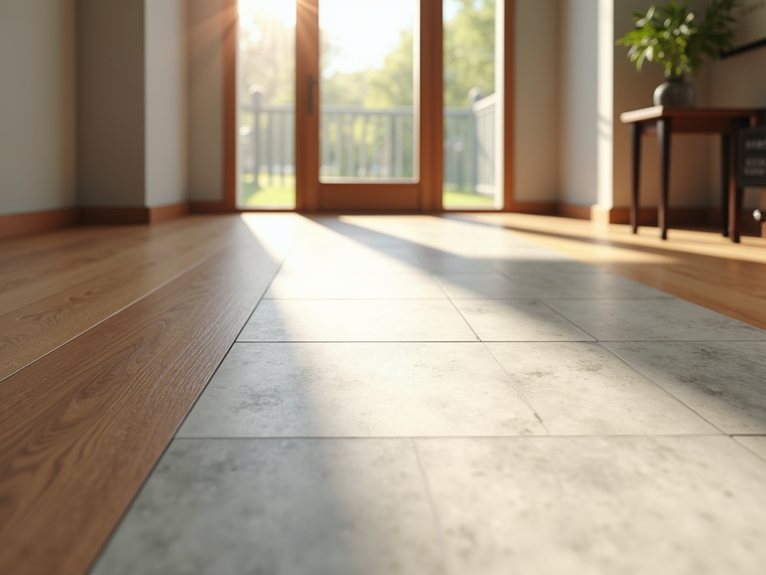
Homeowner Alert: The Best Flooring Options That Last for Decades
When you’re choosing flooring for maximum longevity, natural stone, traditional hardwood, and porcelain tile stand out as proven performers that can last 50-100+ years with proper installation and care. Solid hardwood offers 5-7 refinishing cycles, while porcelain’s through-body construction resists wear and moisture. For modern homes, luxury vinyl plank with a 20+ mil wear layer delivers decades of durability. Professional installation and consistent maintenance will help unleash your floor’s full lifespan potential.
Key Takeaways
- Natural stone flooring offers exceptional durability with proper sealing and can last multiple generations while regulating indoor temperatures.
- Solid hardwood floors can survive 100+ years with 5-7 refinishing cycles, developing a valuable patina that enhances home character.
- Porcelain tile resists water, UV damage, and wear for 50+ years when installed professionally with quality grout.
- Polished concrete flooring delivers a 50+ year lifespan with minimal maintenance, offering thermal efficiency and chemical resistance.
- High-quality LVP with 20+ mil wear layers provides decades of durability while allowing easy replacement of damaged planks.
Natural Stone: The Ultimate Investment in Long-Term Durability
Timelessness defines natural stone flooring, making it one of the most enduring and prestigious choices for residential and commercial spaces. When you’re considering natural stone, you’ll benefit from its exceptional durability and unique characteristics that stem from precise quarry sourcing techniques. Each stone variety offers distinct performance qualities, from granite’s resistance to scratches to marble’s classic elegance.
You’ll appreciate how natural stone’s thermal mass properties help regulate indoor temperatures, potentially reducing your energy costs. Installation requires skill, as proper substrate preparation and sealing are vital for longevity. While the initial investment is higher than other options, you’re gaining flooring that can last generations with proper maintenance. For maximum safety, choose stones with appropriate slip resistance ratings and secure professional installation to prevent future issues.
Engineered Hardwood vs. Solid Wood: Which Lasts Longer?
While both engineered hardwood and solid wood floors offer distinct advantages, their longevity depends largely on construction quality and maintenance practices. The key manufacturing differences lie in their structure: solid wood features a single piece throughout, while engineered wood combines a real wood top layer with cross-layered plywood beneath.
The durability battle between solid and engineered hardwood comes down to thoughtful manufacturing and proper care over time.
- Solid wood floors can last 100+ years and be refinished 5-7 times, but they’re vulnerable to moisture damage and warping in humid conditions
- Engineered hardwood offers superior moisture resistance and stability, typically lasting 20-30 years with 2-3 refinishing cycles
- Your choice should factor in installation location – engineered hardwood performs better in basements and bathrooms, while solid wood excels in living areas and bedrooms
Choose based on your home’s specific conditions and your long-term maintenance commitment.
Porcelain Tile: A Time-Tested Choice for High-Traffic Areas
Known for its exceptional durability and water resistance, porcelain tile stands out as the premier flooring choice for areas that see constant foot traffic and moisture exposure. Modern glaze innovations have enhanced its scratch resistance while offering slip-resistant textures that help safeguard your family’s safety in wet conditions.
You’ll find that porcelain’s dense composition makes it virtually impervious to water damage, stains, and wear. Today’s sustainable manufacturing processes create tiles that are both eco-friendly and built to last 50+ years when properly installed. For maximum longevity, you’ll need proper subfloor preparation and professional installation with precise spacing and high-quality grout. The material’s through-body color means chips won’t show, and its resistance to UV rays prevents fading, making it ideal for both indoor and outdoor applications.
Luxury Vinyl Plank: Modern Technology Meets Lasting Performance
You’ll find that luxury vinyl plank (LVP) flooring excels at resisting scratches, dents, and daily wear through its advanced multi-layer construction and protective wear layer. The click-lock installation system allows you to complete most installations without professional help, saving both time and money. Your maintenance routine remains straightforward – regular sweeping and occasional damp mopping will keep your LVP floors looking pristine for years to come.
Durability Against Daily Impact
Thanks to modern manufacturing advancements, Luxury Vinyl Plank (LVP) flooring delivers exceptional durability against daily wear and tear. The multi-layer construction provides superior indentation resistance, protecting your floors from furniture legs and high heels. You’ll find that LVP’s shock absorption capabilities help prevent damage from dropped items while reducing noise transmission between floors.
- The wear layer, measured in mils (thousandths of an inch), shields against scratches and scuffs – choose 20 mils or higher for maximum protection
- Core layers provide stability and impact resistance, preventing dents from heavy objects
- The backing layer creates a moisture barrier while enhancing the floor’s ability to withstand daily foot traffic without showing signs of wear
Installation and Maintenance Simplicity
Installing LVP flooring has become remarkably straightforward with modern click-lock systems and floating floor designs. You’ll find that most LVP products don’t require adhesives or specialized tools, making quick installation possible with basic equipment like a utility knife, measuring tape, and spacers.
The maintenance routine couldn’t be simpler. You can keep your LVP floors looking pristine with regular sweeping and occasional damp mopping. Unlike hardwood, you won’t need to worry about refinishing or specialized cleaning products. If a plank becomes damaged, you can easily replace individual sections without disrupting the entire floor.
For tool requirements, you’ll typically need:
- Utility knife
- Tape measure
- Level
- Rubber mallet
- Spacers
- Square tool
These basic items are sufficient for most DIY installations.
The Enduring Appeal of Traditional Hardwood Floors
You’ll find that traditional hardwood flooring stands out for its exceptional ability to appreciate while adding authentic character to your home. When properly installed and maintained, hardwood’s natural aging process creates a rich patina that enhances its inherent beauty over decades of use. Your investment in hardwood floors can yield up to 75% ROI during resale, making it one of the most financially sound flooring choices you can select for your property.
Timeless Beauty and Character
Traditional hardwood floors stand as a tribute to enduring craftsmanship, elevating any space with their rich, natural beauty and distinctive character. You’ll find that each plank tells its own story through heritage craftsmanship and vintage aesthetics, creating an atmosphere that can’t be replicated by synthetic materials.
- As your hardwood ages, it develops a unique patina that enhances its character, making each scratch and mark part of your home’s living history
- You’ll find that properly maintained hardwood floors can increase your property’s value, with some varieties lasting over a century
- Natural wood grain patterns provide slip-resistant texture, offering better traction than many modern flooring alternatives
When you choose hardwood, you’re investing in a floor that won’t just withstand decades of use – it’ll become more distinguished with each passing year.
Superior Return on Investment
Investment wisdom reveals that hardwood floors consistently deliver one of the highest returns among home improvement projects, often recouping 70-80% of their initial cost during resale. When you’re considering market timing, installing hardwood floors during off-peak seasons can yield significant savings while maintaining quality.
You’ll find that hardwood’s durability translates into decades of service, reducing long-term replacement costs. Professional installation guarantees proper acclimation and subfloor preparation, preventing costly future repairs. Some regions offer tax incentives for using sustainable hardwood materials, further enhancing your investment value.
With proper maintenance, your hardwood floors will appreciate over time, unlike synthetic alternatives that typically require replacement every 10-15 years. The versatility of hardwood allows for multiple refinishing cycles, effectively extending your investment’s lifespan while preserving its market appeal.
Natural Aging and Patina
Developing character over time, hardwood floors acquire a distinctive patina that synthetic materials simply can’t replicate. This historical patina creates depth and richness that’s highly valued in traditional homes, reflecting decades or even centuries of careful use. You’ll notice how your wood floors develop their own unique personality, enhancing your home’s cultural perception and market value.
- Oak and maple floors typically develop a honey-golden patina, darkening gracefully in high-traffic areas
- Walnut flooring ages into deep, chocolate tones with subtle variations that mask minor wear patterns
- Cherry wood evolves from light pink to rich auburn, creating an increasingly sophisticated appearance
When properly maintained, these natural aging processes won’t compromise your floor’s structural integrity. Instead, they’ll create an authentic, lived-in character that modern flooring alternatives attempt unsuccessfully to imitate.
Concrete Flooring: Industrial Strength Meets Contemporary Design
Once considered purely utilitarian, concrete flooring has evolved into a sophisticated design choice that combines industrial durability with modern aesthetics. You’ll find that polished concrete offers exceptional longevity, while microtopping finishes provide endless customization options for your space.
When installing concrete flooring, you’ll need proper substrate preparation and moisture testing to guarantee lasting results. The surface must cure for at least 28 days before applying decorative treatments. You’ll appreciate that concrete floors withstand heavy foot traffic while offering slip-resistant options for enhanced safety. With proper installation and maintenance, your concrete floor can last over 50 years.
Maintenance Tips to Maximize Your Flooring’s Lifespan
Regular maintenance routines substantially extend your flooring’s functional life while preserving its aesthetic appeal. You’ll need to implement strategic care practices that focus on stain prevention and perform regular inspections to catch potential issues before they become major problems.
Consistent upkeep not only prolongs your floor’s lifespan but also maintains its beauty, making prevention and early detection essential elements of flooring care.
- Address spills immediately using manufacturer-approved cleaning solutions, and place protective pads under furniture legs to prevent scratches and indentations that can compromise your flooring’s integrity
- Schedule quarterly inspections to check for loose boards, worn seals, or developing cracks, especially in high-traffic areas and near entryways where moisture often accumulates
- Document your maintenance activities and keep detailed records of cleaning products used, helping you track what works best for your specific flooring type while maintaining warranty compliance and ensuring long-term durability
Frequently Asked Questions
How Does Radiant Floor Heating Affect Different Types of Flooring Materials?
You’ll need to take into account thermal conductivity and material compatibility when installing radiant heating. Ceramic tile and stone work best, while wood can warp. Vinyl and carpet reduce heat transfer efficiency.
Can Flooring Choices Impact a Home’s Resale Value in Different Geographical Regions?
You’ll maximize resale value by matching your flooring to regional preferences – hardwood for Northeast markets, tile in Southwest regions. Buyers’ expectations differ geographically, so research local trends before installation.
What Flooring Options Are Best for Homes With Pets and Children?
You’ll want luxury vinyl plank or porcelain tile for superior scratch resistance and easy maintenance. Both options withstand pet claws and kids’ activities while offering waterproof protection against spills and accidents.
How Do Seasonal Temperature Changes Affect Various Flooring Materials?
Up to 75% of flooring issues stem from temperature shifts. You’ll notice material expansion in hardwood during humid summers, while vinyl and laminate better resist seasonal moisture changes without warping.
Which Flooring Materials Are Most Resistant to Water Damage in Flood-Prone Areas?
You’ll get superior flood resistance with porcelain tile, which won’t warp or deteriorate when submerged. Luxury vinyl planks also perform well, offering a waterproof core and tight-locking seams for protection.
Conclusion
Your choice in long-lasting flooring stands like a foundation stone in your home’s value. By selecting materials that match your lifestyle, investing in professional installation, and following proper maintenance protocols, you’ll extend your floor’s lifespan substantially. Whether you’ve chosen natural stone’s timeless appeal or luxury vinyl’s modern durability, remember that regular care and quality materials will protect your investment for decades to come.


