
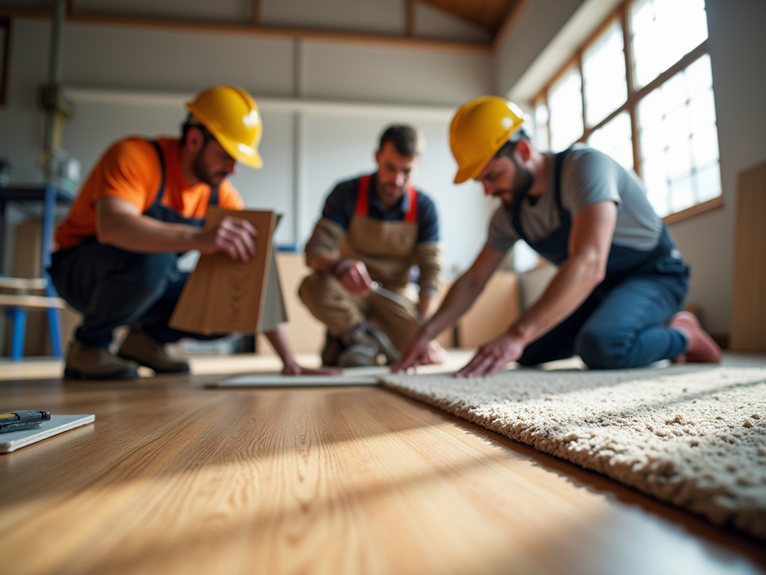
America’s Most Trusted Flooring Contractors Reveal Their Top Picks
You’ll find that top contractors consistently recommend luxury vinyl plank and engineered hardwood as their go-to flooring choices. These materials offer exceptional durability, water resistance, and strong resale value that homeowners need. While hardwood adds timeless appeal and can last generations, luxury vinyl provides superior scratch resistance and easier maintenance at a lower cost. Your specific choice should factor in your local climate, room purpose, and lifestyle needs – let’s examine what would work best for your space.
Key Takeaways
- Luxury vinyl flooring tops contractor recommendations for busy households due to superior durability, water resistance, and minimal maintenance requirements.
- Hardwood flooring remains the premium choice for adding lasting property value and can be refinished multiple times over generations.
- Porcelain tile excels in high-traffic areas with exceptional scratch resistance, easy cleaning, and minimal allergen accumulation.
- For basements and moisture-prone areas, contractors favor moisture-resistant vinyl plank or treated concrete solutions.
- Natural stone earns contractors’ praise for 50+ year lifespan and durability, particularly in entryways and high-traffic zones.
Why Professional Contractors Should Guide Your Flooring Choice
When it comes to selecting new flooring, professional contractors offer indispensable know-how that can save you time, money, and potential headaches down the road. They’ll guide you through the complex world of flooring materials, helping you match your lifestyle needs with the right product specifications.
Professional contractors provide vital warranty advocacy, ensuring you understand the terms and maximize your protection. They’re also experts at permit management, handling the necessary paperwork and ensuring your installation meets local building codes. You’ll benefit from their relationships with suppliers, often accessing better prices and premium materials not available to the general public.
Their experience helps you avoid common pitfalls, from choosing materials unsuitable for your climate to identifying potential subfloor issues before they become costly problems.
Best Performing Flooring Materials for High-Traffic Areas
When choosing between hardwood and luxury vinyl for high-traffic areas, you’ll find that each material offers distinct advantages for durability and maintenance. Your hardwood floors can last generations with proper care, but require regular refinishing and are more susceptible to moisture damage. Luxury vinyl, while offering easier maintenance and superior water resistance, typically lasts 15-20 years and won’t add the same property value as hardwood.
Hardwood Vs Luxury Vinyl
Although both hardwood and luxury vinyl flooring remain popular choices for high-traffic areas, contractors increasingly recommend luxury vinyl for its superior durability and maintenance advantages. You’ll find that luxury vinyl offers exceptional resistance to scratches, dents, and moisture, while hardwood requires more careful maintenance to preserve its beauty.
When choosing between these options, consider that while hardwood brings timeless appeal and can be refinished multiple times, luxury vinyl delivers practical benefits for busy households. It’s water-resistant, requires minimal upkeep, and comes in a wide variety of on-trend colors and patterns that convincingly mimic natural materials.
High-Traffic Flooring Maintenance
Building on our comparison of flooring materials, maintaining high-traffic areas demands specific flooring choices that can withstand constant wear and tear. You’ll want to focus on materials that support both durability and allergen control while making waste management easier in busy spaces.
- Choose porcelain tile for its exceptional resistance to scratches and stains, plus its ability to prevent allergen buildup through easy cleaning and minimal grout lines
- Install commercial-grade vinyl with enhanced wear layers that won’t trap dust or require harsh chemicals for maintenance, making it ideal for spaces that need frequent sanitizing
- Select sealed concrete flooring for its virtually indestructible surface and minimal maintenance requirements – just regular sweeping and occasional damp mopping will keep it looking pristine while controlling dust and debris
Cost vs. Durability: Expert Insights on Value for Money
When you’re evaluating flooring options, you’ll want to weigh both the initial cost per square foot and the long-term value of your investment. You’ll find that premium materials like hardwood and porcelain tile, while more expensive upfront at $8-15 per square foot, can last 50+ years with proper maintenance. These durable options often prove more economical over time compared to budget-friendly alternatives like vinyl or laminate that may need replacement every 10-15 years.
Investment Returns Over Time
Understanding the long-term value of flooring materials requires looking beyond initial costs to examine durability and lifecycle expenses. When you’re planning your flooring investment, consider how different materials affect your home’s resale appreciation and their depreciation curves over time.
- Hardwood floors typically retain 70-80% of their value after 25 years and can be refinished multiple times, making them a strong long-term investment
- Luxury vinyl plank flooring offers a 10-15 year lifespan with minimal maintenance costs, providing steady returns for budget-conscious homeowners
- Natural stone, while expensive upfront, can last 50+ years and substantially increase property values when properly maintained
Your flooring choice impacts both immediate comfort and future returns. By considering installation costs against longevity and market appeal, you’ll make an investment that pays off for years to come.
Price Per Square Foot
The price per square foot of flooring materials can vary dramatically, from $2 for basic vinyl to $30+ for premium hardwood. While retail markups can substantially impact your final cost, you’ll find better value by working with established contractors who have access to bulk discounts and wholesale pricing.
When evaluating flooring options, consider the total cost of ownership, not just the initial price tag. A $15 per square foot porcelain tile might actually prove more economical than an $8 laminate when you factor in longevity and maintenance costs. You’ll save money in the long run by choosing materials that match your space’s traffic patterns and usage demands. Many contractors recommend mid-range options ($8-15 per square foot) as the sweet spot between affordability and durability.
Regional Climate Considerations for Flooring Selection
Since regional climate patterns directly impact flooring performance and longevity, professional contractors carefully consider local weather conditions before recommending specific materials. You’ll need to account for humidity effects on wood expansion and the freeze-thaw cycles that can affect certain flooring types.
In areas with significant moisture variation, you’ll want to choose materials that won’t warp or buckle. Climate-appropriate selections help prevent costly repairs and guarantee your flooring stays beautiful for years.
- Desert regions benefit from tile and stone flooring that stays cool and resists sun damage
- Coastal areas require moisture-resistant options like vinyl or treated hardwoods
- Northern regions need flooring that can handle temperature fluctuations and won’t crack during freeze-thaw cycles
Top Flooring Recommendations by Room Type
Professional contractors know that each room’s unique requirements demand specific flooring solutions to maximize durability and comfort. You’ll want waterproof luxury vinyl or porcelain tile in bathrooms and kitchens to handle moisture, while hardwood or engineered wood creates a warm, inviting atmosphere in living rooms. For entryway style, consider durable materials like slate or textured ceramic that can withstand heavy foot traffic and hide dirt.
In bedrooms, plush carpeting provides comfort underfoot, especially for nursery softness where little ones will crawl and play. Your home office might benefit from low-maintenance laminate flooring that can support rolling chairs, while basements need moisture-resistant options like vinyl plank or treated concrete. Laundry rooms require water-resistant, easy-to-clean surfaces that can handle occasional spills and humidity.
Installation and Maintenance Tips From Industry Veterans
Becoming adept at proper installation techniques can make the difference between flooring that lasts decades and one that needs premature replacement. You’ll want to focus on proper tool selection and careful preparation of the subfloor before starting any installation project. Don’t forget to complete your warranty registration immediately after installation to protect your investment.
Proper installation and careful preparation are essential foundations for long-lasting flooring that performs as intended for decades to come.
- Always acclimate your flooring materials to room temperature for at least 48 hours before installation to prevent warping or buckling
- Check humidity levels in your space and maintain them between 35-55% to protect your flooring from moisture damage
- Create a maintenance schedule that includes regular cleaning with manufacturer-approved products and periodic professional deep cleaning
Remember to document your installation process with photos and keep all receipts, which may be necessary for future warranty claims.
Frequently Asked Questions
How Long Should I Wait Before Walking on Newly Installed Floors?
You’ll need to wait 24-48 hours for adhesive cure on most floors. For maximum safety, check your flooring’s specific curing time, as some materials require up to 72 hours.
What Are the Best Eco-Friendly Alternatives to Traditional Hardwood Flooring?
You’ll find that bamboo flooring and cork flooring are excellent, eco-friendly choices. Bamboo grows rapidly and regenerates quickly, while cork is harvested sustainably from the tree bark without harming the tree.
Can Existing Floor Patterns Affect Property Resale Value?
You’ll see your home’s worth climb when your floors create an inviting visual flow. Pattern popularity matters – thoughtfully designed layouts can enhance buyer appeal and make your spaces feel more welcoming.
Which Flooring Materials Are Safest for Households With Young Children?
You’ll want cork, rubber, or low-pile carpet with non-toxic finishes for your children’s safety. These materials offer excellent slip resistance and cushioning if your little ones fall while playing.
What Are the Warning Signs That Subfloors Need Replacement?
Like a ship’s distress signal, squeaky spots warn you of trouble below. Watch for uneven surfaces, bouncy areas, mold growth, musty odors, and visible sagging – you’ll need professional help right away.
Conclusion
You’ve now got the inside scoop from America’s flooring veterans – like renowned craftsmen passing down their trade secrets. Whether you’re aiming for Cinderella’s ballroom elegance or the rugged durability of a Viking great hall, let these expert perspectives guide your choice. Remember, the right flooring isn’t just about looks – it’s your home’s foundation for years to come. Trust these time-tested recommendations to make your investment count.


