
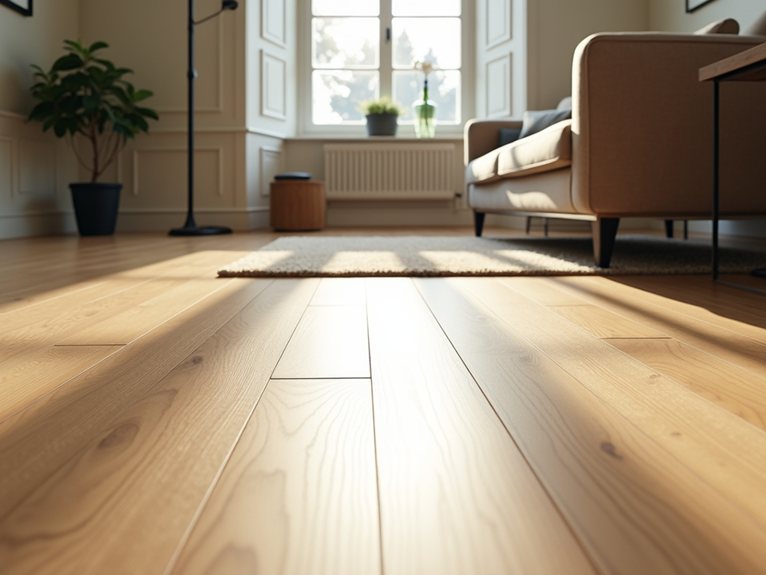
Is Your Floor Outdated? Here’s What Every Modern Home Needs
Your floors are likely outdated if you notice persistent odors, uneven surfaces, or dated patterns that clash with modern aesthetics. Today’s homes adopt wide planks, large-format tiles, and sustainable materials like bamboo and cork that blend style with durability. Smart flooring technology and eco-friendly innovations have redefined what’s possible underfoot, while luxury vinyl and engineered options offer water-resistant practicality. Learn how the right flooring choices can dramatically boost your home’s value and appeal.
Key Takeaways
- Wide plank flooring creates an expansive, contemporary feel while reducing visible seams in modern homes.
- Smart flooring with integrated sensors offers automated lighting, temperature control, and enhanced safety features.
- Large-format porcelain tiles that mimic natural stone provide durability and minimal maintenance for today’s lifestyle.
- Sustainable materials like bamboo and cork combine eco-friendly benefits with modern aesthetics and superior performance.
- Contemporary patterns like herringbone and geometric designs add sophisticated visual interest without overwhelming the space.
Signs Your Current Flooring Needs an Update
Have you noticed those subtle signs that your flooring isn’t quite living up to your home’s potential? Beyond visible wear and tear, your floors might be sending important signals it’s time for an update. When you detect persistent odors emanating from your floors, particularly in areas prone to moisture, it’s often an indicator of underlying issues that shouldn’t be ignored.
Watch for uneven surfaces, squeaking boards, or soft spots that could point to subfloor damage. These structural concerns not only compromise your home’s safety but also its aesthetic appeal. You’ll want to pay attention to dated patterns, fading colors, or materials that no longer align with current design trends. When your flooring shows these signs, investing in modern alternatives isn’t just about style—it’s about maintaining your home’s integrity and value.
Top Modern Flooring Trends for 2024
While traditional hardwood has long been a staple, 2024’s flooring trends are embracing innovative materials and bold design choices. You’ll find homeowners gravitating toward sustainable options that don’t compromise on style or durability. Wide planks are dominating the market, creating an expansive feel in any room while reducing the number of visible seams.
- Eco-friendly bamboo and cork installations with acoustic underlays, perfect for noise reduction in multi-story homes
- Large-format porcelain tiles that mimic natural stone, offering exceptional durability with minimal maintenance
- Luxury vinyl planks in weathered, coastal-inspired tones that combine water resistance with authentic wood textures
These modern flooring solutions don’t just enhance your home’s aesthetic – they’re engineered to withstand daily wear while providing comfort and safety underfoot.
Sustainable and Eco-Friendly Options Taking Over
If you’re seeking stylish yet sustainable flooring choices, you’ll be impressed by bamboo’s dramatic rise in market share, offering both durability and rapid renewability. Cork flooring, nature’s hidden gem, provides a unique combination of visual warmth and natural sound absorption that’s perfect for modern spaces. These eco-conscious materials represent the perfect fusion of environmental responsibility and contemporary design, redefining how you’ll approach your next flooring project.
Bamboo’s Rising Market Share
Bamboo flooring increasingly dominates the sustainable materials market, capturing an impressive 25% annual growth rate since 2019. Despite temporary supply constraints, pricing trends remain favorable compared to traditional hardwoods, making bamboo an attractive investment for your home’s future.
You’ll find bamboo’s modern appeal extends beyond its eco-friendly nature. Today’s advanced manufacturing techniques deliver exceptional durability and sophisticated aesthetics that rival premium materials.
Consider these key advantages of bamboo flooring:
- Reaches full maturity in just 5-7 years, compared to 20-120 years for traditional hardwoods
- Offers 2.5 times the hardness of Red Oak, ensuring superior wear resistance
- Features natural antimicrobial properties that create a healthier living environment
When properly sealed and maintained, your bamboo floors will retain their beauty for decades while supporting environmental sustainability.
Cork: Nature’s Hidden Gem
Another sustainable superstar in modern flooring, cork brings an extraordinary blend of comfort and sophistication to your living spaces. You’ll appreciate its natural sound-dampening properties, as cork acoustics create peaceful environments perfect for home offices or meditation rooms. If you’re concerned about allergies, you’ll love that cork naturally repels dust mites and mold.
Transform your home with cork’s warm, honey-toned patterns that complement both modern and traditional décor. Its cellular structure provides excellent insulation while remaining firm enough for furniture placement. You’ll find peace of mind knowing your flooring choice supports sustainable harvesting practices, as cork bark regenerates every nine years without harming the tree.
The Return of Natural Materials in Contemporary Design
When you’re selecting natural materials for your modern floors, you’ll find today’s eco-friendly wood options include reclaimed timber, bamboo, and responsibly harvested hardwoods that combine sustainability with sophisticated aesthetics. Natural stone selections require careful consideration of factors like porosity, durability, and maintenance requirements to guarantee they’ll serve both your design vision and practical needs. Your choice between materials like travertine, slate, or limestone can dramatically influence your space’s character while providing the authentic, organic elements that define contemporary natural design.
Eco-Friendly Wood Choices
Today’s eco-conscious homeowners are rediscovering the timeless appeal of sustainable wood flooring, marking a significant shift in contemporary design preferences. You’ll find that responsibly sourced hardwoods offer exceptional Acoustic Benefits while providing lasting durability and Finish Compatibility with modern sealants.
When selecting eco-friendly wood flooring, consider these certified sustainable options:
- Bamboo – Rapidly renewable, naturally antimicrobial, and exceptionally hard-wearing
- Reclaimed Oak – Historic character with minimal environmental impact, perfect for rustic-modern spaces
- FSC-Certified Maple – Locally sourced, naturally bright, and ideal for contemporary interiors
These sustainable choices don’t just protect our forests – they create healthier indoor environments while maintaining the sophisticated aesthetic that modern design demands. You’ll enjoy peace of mind knowing your flooring choice supports both environmental stewardship and design excellence.
Natural Stone Selection Tips
Natural stone’s resurgence in modern interior design reflects our deepening connection to organic materials and timeless aesthetics. When selecting stone flooring, you’ll want to verify the quarry origin to guarantee consistent coloring and premium quality throughout your space.
Consider your stone’s slip rating carefully, especially in areas prone to moisture. You’ll find that honed limestone offers excellent grip, while polished marble requires more caution. For high-traffic areas, opt for denser stones like granite or quartzite that resist wear. In bathrooms and kitchens, choose stones with lower porosity to prevent staining and moisture absorption.
Match your stone’s finish to your lifestyle – textured surfaces work beautifully in casual spaces, while polished finishes enhance formal rooms. Remember that each stone’s unique veining and character will create an unrepeatable pattern in your home.
Smart Technology Integration in Modern Floors
Integrating smart technology into flooring systems has revolutionized how we interact with our living spaces. You’ll find sophisticated underfloor sensors that can detect movement patterns and adjust lighting automatically, while gesture control features let you manage room settings with simple foot movements.
Today’s tech-enabled floors offer unparalleled functionality and safety:
- Motion-activated pathway lighting that illuminates your steps at night
- Pressure-sensitive tiles that can alert caregivers if someone falls
- Temperature-regulating systems that adjust to your comfort preferences
These innovations aren’t just about convenience – they’re reshaping home safety and energy efficiency. When you’re upgrading your floors, consider how smart technology can enhance both the aesthetic appeal and practical functionality of your space, creating a more responsive and secure living environment.
Color Schemes and Patterns That Define Today’s Style
Beyond the technological advances in modern flooring, the visual aesthetic of contemporary floor design has shifted dramatically. You’ll find today’s most sought-after styles embracing two distinct directions: Monochrome Minimalism and Bold Geometrics. The minimalist approach features subtle gradients in grayscale or earth tones, creating a serene foundation that won’t overwhelm your space.
If you’re ready to make a statement, consider the growing trend of Bold Geometrics. These patterns incorporate clean lines and precise angles, often using contrasting colors to create a striking visual impact. You can opt for herringbone layouts, hexagonal tiles, or intricate mosaic designs that add personality while maintaining sophistication. The key is selecting patterns that complement your home’s design and won’t become visually overwhelming or create safety concerns with excessive contrast.
Budget-Friendly Ways to Modernize Your Floors
Looking to update your floors without breaking the bank? You don’t need to replace your entire flooring to achieve a modern look. Smart design choices can revitalize your space while keeping costs manageable and maintaining safety.
- Apply floor paint in geometric patterns on existing hardwood or concrete – it’s durable, easy to clean, and can instantly modernize dated surfaces while providing slip resistance
- Perfect rug layering by combining vintage and contemporary pieces – place a smaller statement rug at an angle over a larger neutral base to create visual interest without major construction
- Refresh grout lines in tile floors using specialized paint or stain – this affordable technique can make old tile look new again while preserving its non-slip properties
Durability Meets Design: Latest Flooring Innovations
While durability has always been essential for flooring, today’s innovations seamlessly merge performance with sophisticated design elements. You’ll find state-of-the-art scratch-resistant finishes that protect your floors from daily wear while maintaining their luxurious appearance. These advanced coatings don’t just guard against damage – they enhance the floor’s natural beauty.
The latest hybrid composites represent a notable leap forward, combining the best qualities of multiple materials. You’re getting the warmth of wood with the resilience of vinyl, or the elegance of stone with unparalleled impact resistance. These modern solutions offer exceptional stability in varying temperatures and moisture levels, making them perfect for any room in your home. They’re engineered to withstand heavy foot traffic while providing stunning visual appeal that enhances your space’s overall design.
Room-by-Room Guide to Modern Flooring Choices
Each room in your home demands unique flooring considerations based on its specific function and aesthetic requirements. You’ll want to balance style with practicality while ensuring each space meets its intended purpose. Smart flooring choices can enhance your living spaces while adding value to your home.
- High-traffic areas like kitchens and entryways need durable, water-resistant materials such as luxury vinyl or porcelain tile
- Bedrooms and closet flooring benefit from warm, cozy options like plush carpet or engineered hardwood that create an inviting atmosphere
- Playroom acoustics call for sound-dampening solutions – consider cork flooring or low-pile carpet tiles that reduce noise while standing up to active use
Choose materials that complement your home’s overall design scheme while addressing the specific demands of each space. Today’s innovative flooring options offer both form and function without compromising on style.
Investment Value: Which Floors Boost Home Worth
When you’re evaluating flooring options against their investment potential, hardwood consistently ranks highest with a 70-80% return on investment at resale. You’ll find that premium materials like natural stone and high-end porcelain tile also command strong resale values, typically returning 50-70% of your initial costs. Engineered hardwood offers a savvy middle ground, providing the aesthetic appeal of solid wood with durability that appeals to future buyers, making it an increasingly popular choice for value-conscious homeowners.
Return on Investment Stats
Smart flooring choices can dramatically enhance your home’s resale value and deliver impressive returns on investment. Based on regional averages and timeframe benchmarks, certain flooring materials consistently outperform others when it comes to recouping your investment.
- Hardwood flooring typically returns 70-80% of your investment and can last 100+ years with proper maintenance, making it the safest long-term choice
- Engineered wood offers a 60-75% return while providing superior moisture resistance compared to solid hardwood, ideal for basements and bathrooms
- Luxury vinyl plank delivers a 50-70% return on investment while offering exceptional durability and waterproof properties, perfect for high-traffic areas
These proven returns demonstrate why choosing premium flooring materials isn’t just about aesthetics—it’s a sound financial decision for your home’s future value.
Best Resale Value Flooring
Building on those ROI statistics, let’s look at specific flooring materials that consistently maximize your home’s resale potential. Hardwood flooring remains the undisputed champion, offering 70-80% returns on your investment across most markets. Engineered hardwood provides similar benefits at a lower price point, especially in regions with humidity concerns.
Market preferences show that luxury vinyl plank (LVP) is gaining significant traction, particularly in family-focused neighborhoods where durability matters. Regional variations play a pivotal role – tile floors command premium prices in warmer climates, while solid hardwood sees stronger returns in traditional Northeastern markets. You’ll want to keep in mind your local real estate trends when selecting materials. High-end porcelain tile and natural stone also maintain excellent resale value, especially in upscale homes and moisture-prone areas like bathrooms and kitchens.
Frequently Asked Questions
How Long Does Professional Floor Installation Typically Take to Complete?
Your project timeline depends on crew size and floor type, but most professional installations take 2-4 days for an average home, with larger spaces requiring up to a week for completion.
Can I Install New Flooring Directly Over My Existing Floor?
You’ll need to check moisture barriers and weight considerations first. While you can install over existing floors, it’s not always advisable for structural and aesthetic integrity.
What’s the Best Flooring Choice for Homes With Pets?
Choose luxury vinyl plank or porcelain tile – they’re both excellent for pets due to superior scratch resistance and stain resistance. You’ll love how they maintain their beauty while standing up to claws and accidents.
How Often Should Different Types of Flooring Be Replaced?
You’ll need to replace hardwood every 30-50 years, laminate every 15-25 years, and carpet every 5-10 years, depending on your material lifespans and household traffic patterns. Tile can last 50+ years.
What Temperature and Humidity Levels Are Ideal for Maintaining Modern Floors?
You’ll want to maintain a humidity range of 35-55% and keep your home’s temperature between 60-80°F year-round. Use a climate control system to make certain these stable conditions protect your flooring investment.
Conclusion
Just as you’re considering a flooring update, the design world’s seeing an unparalleled merge of technology and natural materials. You’ll find that today’s most sought-after floors aren’t just beautiful – they’re sustainable, smart, and value-adding investments. Whether you choose heated porcelain tiles or reclaimed hardwood with smart sensors, your modernized flooring will reimagine your space while staying relevant for years to come. The future of flooring is already at your feet.


